
Enterprise Cybersecurity in 2026: Building Resilience in an AI-Driven Threat Landscape
As we move through 2026, the enterprise cybersecurity landscape has undergone a fundamental transformation. The convergence of artificial intelligence, expanding attack surfaces, and increasingly sophisticated threat actors has created an environment where traditional defense-in-depth strategies are no longer sufficient. For organizations building and maintaining enterprise software, e-commerce platforms, and digital infrastructure, understanding and adapting to this new reality is not optional — it is a business imperative.
At Tech Hub Services, we work with enterprises every day to architect secure, scalable systems. This post examines the key cybersecurity trends shaping 2026 and provides actionable strategies for building cyber resilience into your organization.
The State of Enterprise Cybersecurity in 2026
The numbers paint a stark picture. According to recent industry data, AI-powered attacks have increased by 56% year-over-year, driven by deepfake impersonations, AI-enabled malware, and automated phishing campaigns. Agentic phishing attacks alone are projected to account for over 42% of all global breaches in 2026. Meanwhile, the global cost of ransomware damage is forecast to reach approximately $74 billion this year.
What makes this threat landscape particularly challenging is the speed and scale at which attacks now operate. AI-driven attacks can adapt in real time, learning from defensive responses and adjusting their approach within seconds. Traditional signature-based detection methods, which rely on recognizing known attack patterns, are increasingly ineffective against threats that evolve faster than signature databases can be updated.
Enterprise security budgets are being rapidly reallocated in response. Gartner forecasts that by 2027, more than 40% of all cybersecurity spending will be directly tied to AI-related capabilities, up from just 8% in 2023. Organizations are racing to close the widening gap between AI-powered attacks and legacy defense infrastructure.
Zero Trust Architecture: From Optional to Essential
The perimeter-based security model — build a strong wall, trust everything inside it — has been crumbling for years. Remote work, cloud adoption, and increasingly sophisticated attack vectors have rendered the castle-and-moat approach not just outdated but actively dangerous.
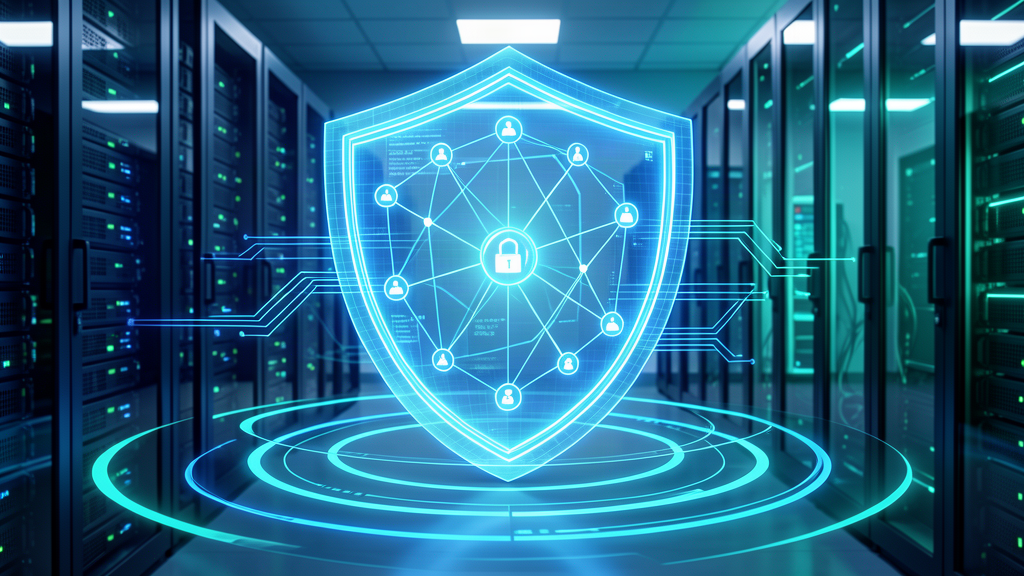
Zero Trust Architecture (ZTA) has emerged as the defining security paradigm of the 2020s. By 2026, it is no longer a forward-thinking strategy — it is a baseline requirement. The core principle is simple: never trust, always verify. Every access request, whether from inside or outside the network, must be authenticated, authorized, and continuously validated.
Key Components of a Zero Trust Implementation
- Identity-Centric Controls: Every digital interaction, whether by human or machine, is verified at every step. Multi-factor authentication (MFA) is mandatory, not optional.
- Microsegmentation: Networks are divided into isolated zones, limiting lateral movement. Even if an attacker breaches one segment, they cannot freely traverse the network.
- Continuous Monitoring: Trust is never assumed. User behavior, device posture, and traffic patterns are continuously analyzed for anomalies.
- Least-Privilege Access: Users and systems are granted only the minimum permissions needed to perform their functions, reducing the blast radius of any compromise.
The Zero Trust market is projected to grow from $633 million to $2.1 billion globally between 2021 and 2026, representing a 27.5% compound annual growth rate. The NSA has released comprehensive Zero Trust Implementation Guidelines, providing enterprises with a structured framework for adoption. For organizations building enterprise software, integrating Zero Trust principles into application architecture from the start is far more cost-effective than retrofitting security later.
Securing the Software Development Lifecycle with DevSecOps
In 2026, security cannot be an afterthought bolted on at the end of the development process. DevSecOps — the practice of integrating security into every stage of the software development lifecycle (SDLC) — has become the standard for enterprise software development.
The goal is simple: make security an intrinsic part of how you build software, not a final gate before deployment. This means shifting security left, embedding automated security checks into development workflows, and making security a shared responsibility across development, operations, and security teams.
Essential DevSecOps Practices for Enterprise Teams
- Automated Security Scanning: Integrate SAST (Static Application Security Testing) and DAST (Dynamic Application Security Testing) tools directly into CI/CD pipelines. Vulnerabilities are detected and flagged at commit time, not after deployment.
- Dependency and Supply Chain Security: With software supply chain attacks on the rise, automated dependency scanning for known vulnerabilities in open-source libraries is critical. Tools like Software Bill of Materials (SBOM) generation provide visibility into every component of your application.
- Infrastructure as Code (IaC) Security: As infrastructure becomes code, security scanning must extend to Terraform, CloudFormation, and Kubernetes manifests. Misconfigurations in cloud infrastructure remain one of the most common attack vectors.
- Secrets Management: Hardcoded credentials, API keys, and database passwords in source code remain a persistent vulnerability. Enterprise-grade secrets management solutions — integrated with vault systems and rotated automatically — eliminate this risk.
- Container Security: With containerized deployments becoming the norm, image scanning, runtime security monitoring, and admission control policies are essential for maintaining a secure container orchestration environment.
Organizations that implement DevSecOps practices effectively report significantly fewer production vulnerabilities, faster mean-time-to-remediation, and reduced security-related deployment delays. Security becomes an enabler of velocity, not a bottleneck.
AI-Powered Defense: Fighting Fire with Fire
Just as attackers are weaponizing AI, defenders must leverage AI to protect enterprise assets. AI-powered security operations centers (SOCs) are becoming the norm, using machine learning models to detect anomalies, prioritize alerts, and automate response actions.
The volume of security alerts generated by modern enterprise environments is overwhelming for human teams. AI-powered SIEM (Security Information and Event Management) and SOAR (Security Orchestration, Automation, and Response) platforms can process millions of events per second, identifying genuine threats amid the noise and triggering automated containment actions.
Key AI-driven defense capabilities include:
- Behavioral Analytics: AI models establish baselines of normal user and system behavior, flagging deviations that may indicate compromise — often before traditional signature-based tools detect anything.
- Automated Incident Response: When a threat is detected, AI-powered systems can automatically isolate affected systems, block malicious IPs, and initiate forensic data collection, all within seconds.
- Predictive Threat Intelligence: Machine learning models analyze global threat data to predict emerging attack patterns, allowing organizations to proactively harden defenses before attacks materialize.
- Phishing Detection: Advanced NLP models analyze email content, sender behavior, and link destinations to identify sophisticated phishing attempts that would fool human reviewers.
According to PwC, 36% of organizations now prioritize AI investment as their top cyber budget item in 2026. The message is clear: organizations that fail to adopt AI-powered defense will be systematically outmaneuvered by AI-powered attackers.
E-Commerce Security: Protecting Customer Trust
For e-commerce platforms, cybersecurity is directly tied to revenue and brand reputation. A single data breach can erode years of customer trust and result in significant regulatory penalties. In 2026, e-commerce platforms face unique security challenges that demand specialized attention.
Critical Security Measures for E-Commerce Platforms
- PCI DSS Compliance: Payment card industry compliance remains the foundation of e-commerce security. With PCI DSS 4.0 now in full effect, organizations must maintain continuous compliance rather than point-in-time assessments.
- Web Application and API Protection (WAAP): Modern e-commerce platforms rely heavily on APIs for everything from product catalogs to checkout flows. WAAP solutions provide specialized protection against API-specific attacks, including injection, broken authentication, and excessive data exposure.
- Bot Management: Automated bots account for a significant percentage of e-commerce traffic. Malicious bots perform credential stuffing, inventory hoarding, and price scraping. Advanced bot management solutions distinguish legitimate users from automated threats without degrading the customer experience.
- Fraud Detection: AI-powered fraud detection systems analyze transaction patterns, device fingerprints, and behavioral signals to identify and block fraudulent transactions in real time.
- Data Privacy: With regulations like GDPR, CCPA, and emerging AI governance frameworks, e-commerce platforms must implement robust data classification, encryption, and access control mechanisms for customer data.
For enterprise e-commerce operations, security is a competitive differentiator. Customers increasingly choose platforms that demonstrate a commitment to protecting their data. Transparent security practices, clear privacy policies, and visible security certifications build the trust that drives conversion and retention.
Building a Cyber Resilience Strategy
The shift from prevention-only to cyber resilience represents one of the most important strategic changes in enterprise security. Cyber resilience acknowledges that despite best efforts, breaches will occur. The question is not if you will be attacked, but how quickly you can detect, respond, and recover.
Elements of a Robust Cyber Resilience Framework
- Incident Response Planning: Every enterprise needs a documented, tested incident response plan. Regular tabletop exercises ensure that teams know their roles and can execute effectively under pressure.
- Backup and Recovery: Immutable, air-gapped backups with tested recovery procedures are the last line of defense against ransomware. The 3-2-1 rule — three copies, two media types, one off-site — remains the gold standard.
- Business Continuity: Security incidents should not mean business stoppage. Resilient architectures include redundancy, failover mechanisms, and degraded-mode operations that keep critical functions running during an incident.
- Cyber Insurance: The cyber insurance market has matured significantly. However, 65% of new policies now include specific AI risk exclusion clauses. Organizations without demonstrable AI governance frameworks face either coverage denial or prohibitively expensive premiums.
- Third-Party Risk Management: Supply chain attacks continue to rise. Enterprises must assess the security posture of vendors, partners, and service providers, extending resilience requirements through contractual obligations and regular audits.
Practical Steps for Enterprise Leaders
For CISOs, CTOs, and IT leaders looking to strengthen their organization's cybersecurity posture in 2026, here are actionable priorities:
- Conduct a Zero Trust Maturity Assessment. Understand where your organization stands on the Zero Trust maturity model and develop a phased implementation roadmap. Start with identity-centric controls and expand outward.
- Integrate Security into Development. If you haven't adopted DevSecOps practices, start now. Begin with automated SAST/DAST scanning in CI/CD pipelines and expand from there. Every vulnerability caught before production is a breach that didn't happen.
- Invest in AI-Powered Defense. Evaluate AI-enhanced SIEM, SOAR, and endpoint detection platforms. The ROI is measured not just in prevented breaches but in reduced alert fatigue and faster incident response.
- Test Your Resilience. Run regular incident response drills, backup restoration tests, and red-team exercises. A plan that has never been tested is a plan that will fail.
- Build Security Culture. Technology alone is not enough. Ongoing security awareness training, phishing simulations, and a culture where security is everyone's responsibility are essential components of a mature security program.
- Secure Your Supply Chain. Implement SBOM requirements, vendor security assessments, and continuous monitoring of third-party dependencies. Your security is only as strong as your weakest partner.
Conclusion
Enterprise cybersecurity in 2026 is defined by the convergence of AI-powered threats, expanding attack surfaces, and the strategic imperative of cyber resilience. The organizations that thrive will be those that treat security not as a cost center or a compliance checkbox, but as a fundamental enabler of business growth and customer trust.
At Tech Hub Services, we help enterprises architect, build, and secure the software systems that power their business. From Zero Trust implementation to DevSecOps pipeline integration to e-commerce platform security, our team brings deep expertise in building secure, scalable solutions for the modern threat landscape.
The threats are evolving. Your defenses must evolve faster. Contact Tech Hub Services today to learn how we can help your organization build the cyber resilience needed to thrive in 2026 and beyond.
Tech Hub Services — Enterprise Software Development, SEO, and E-Commerce Solutions. https://techhubservices.ca